What's new in Tymeslot 1.2

June 19, 2026 · 4 min read
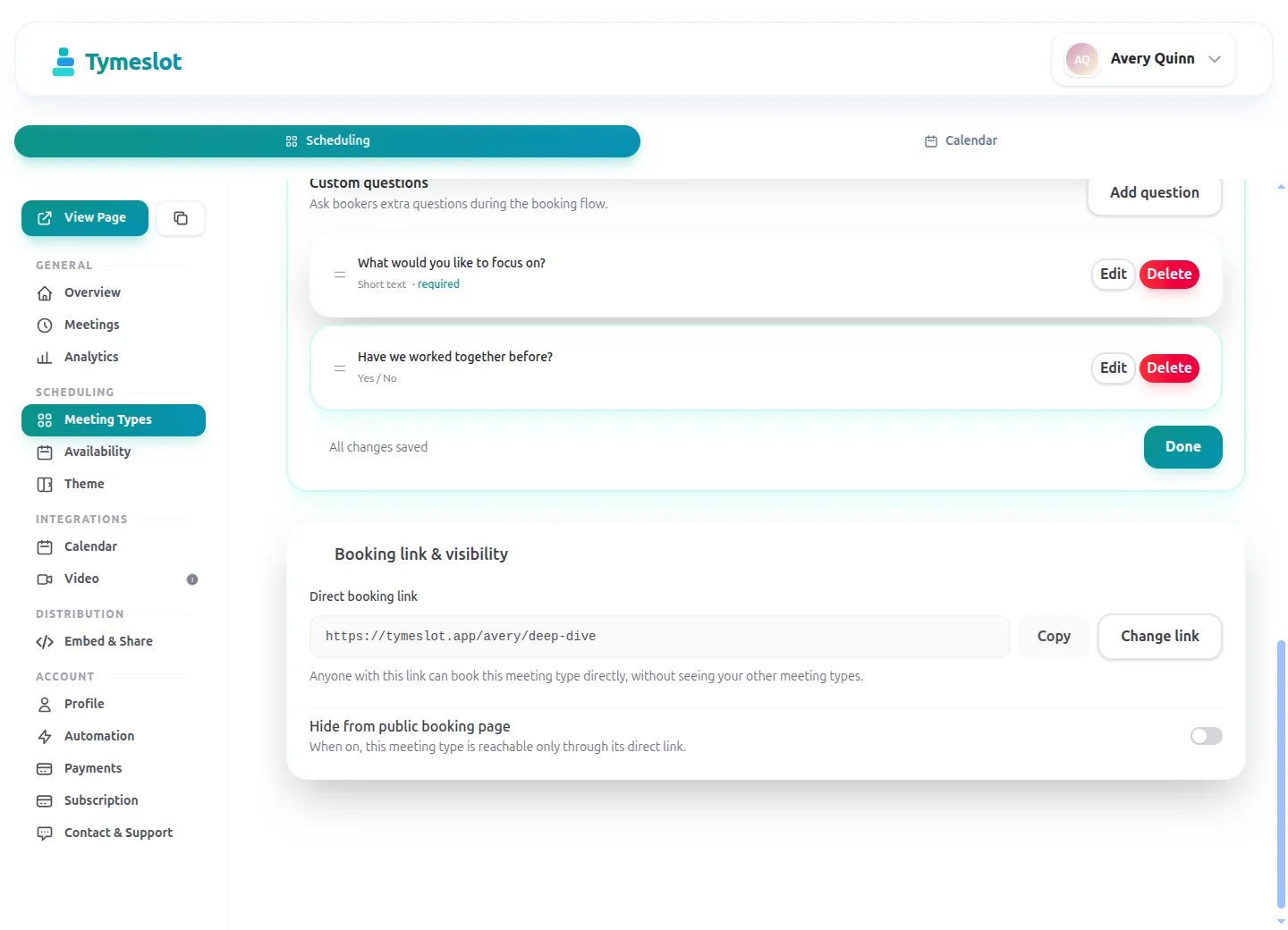
Tymeslot 1.2 is about the people you invite and the way they reach your booking page. Three features, each aimed at a moment that used to need a workaround.
Guest attendees, with RSVPs
For most of Tymeslot's life a booking was a contract between two people: whoever owns the page, and whoever picked a slot. That covers a sales call or a lesson, but it leaves out everything that involves a third person — a workshop, a panel interview, a kickoff where the whole team should be in the room.
1.2 closes that gap. When a meeting type allows it, the person booking can add other guests by email at the moment they choose a time. Each of those guests gets their own invitation, with accept and decline links of their own, so nobody is left guessing who is actually coming. As the replies arrive you watch them land on your dashboard — accepted, declined, still waiting — without chasing anyone or keeping the list by hand.
It is the difference between a page that books one person and a page that quietly handles a small group. You turn it on per meeting type, so your one-to-one slots stay one-to-one and only the meetings that should grow can.

Switch on guests, and whoever books can bring others along by email — each with their own RSVP.
Private and direct booking links
Not everything you offer belongs on your public page. A rate you only quote to existing clients, a standing internal sync, an onboarding call you hand to new hires one at a time — putting those next to your public meeting types is noise at best and awkward at worst.
You can now mark any meeting type private. It drops off your main booking page entirely, but stays fully bookable through a direct link that you, and only you, hand out. And that link is yours to shape: set it to something short and readable for a page you will paste into an email signature, or randomise it into something unguessable for one you want kept quiet. If a private link has travelled further than you meant it to, randomise it again and the old one stops working on the spot — no deleting the meeting type, no rebuilding it from scratch.
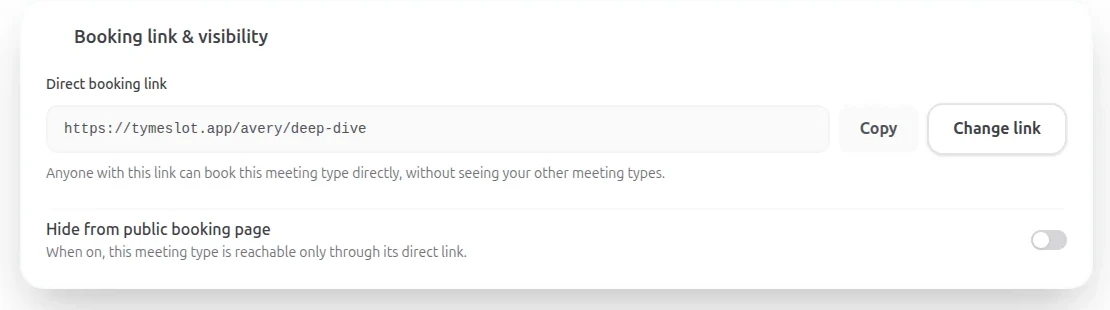
The direct link is yours to copy, change, or hide from your public page entirely.
The result is one Tymeslot account that holds both the page you advertise and the handful of links you share quietly, without the two ever mixing.
A real preview when you share a link
A booking link is made to be shared — pasted into a message, dropped in a calendar invite, sent as a LinkedIn DM, posted to a channel. Until now, what arrived on the other end was a bare URL: a string of characters with nothing to say what it was or whose it was. People click those less, and fairly so.
In 1.2 every booking page carries proper Open Graph and Twitter Card metadata, so the moment your link lands somewhere that understands it — Slack, iMessage, WhatsApp, LinkedIn, X, Discord, and most of the rest — it opens out into a real preview. Your name, your photo, and a short line that says what the link is for, wrapped in a card the reader recognises before they have clicked anything.
None of this is something you set up. It is generated from your page automatically, and it keeps itself current when your details change.
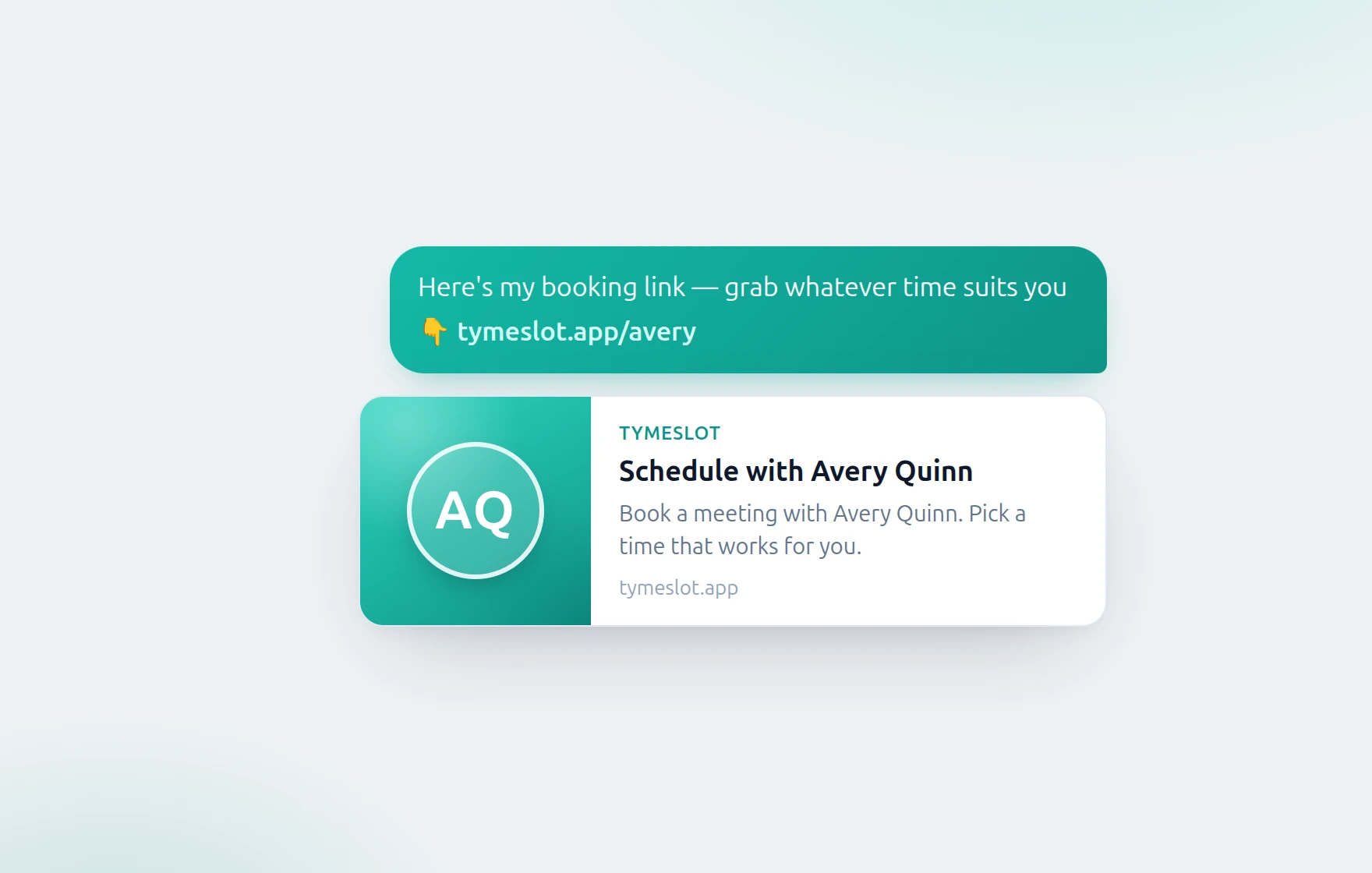
Paste your link into a chat and it unfolds into this — photo, name, and a line that says what it is for.
Under the hood
Not all of a release is something you click. 1.2 also brings the foundation up to date: Tymeslot now runs on Elixir 1.20 and Erlang/OTP 28, and the styling has been rebuilt on Tailwind v4 with a CSS-first setup. None of this changes what you see, but it keeps the platform fast and current, and it is the groundwork the next features are built on.
A meeting is rarely two people on one channel, and 1.2 follows that thread. The full list of changes is on the changelog, and we are glad to hear what you want next.