Scheduling Software for Physiotherapists and Small Clinics
New patients book a full assessment, returning patients book a follow-up, and nobody waits on hold while you are mid-treatment. The managed service runs in the EU.

Updated 22 October 2026
Why do physiotherapy clinics lose time to booking by phone?
A physiotherapy diary holds at least two kinds of appointment: a long first assessment and shorter follow-up treatments, often six or more of them over a few weeks. When patients book by phone, the phone rings while your hands are on someone's shoulder, and a returning patient asking for "the usual" can end up in an assessment-length slot. Tymeslot gives each kind of appointment its own meeting type and link. New patients see the assessment, returning patients get a direct link to follow-ups, and reminders go out without anyone picking up the phone.
Where physiotherapy appointments go wrong
Treatment courses fail quietly. A patient feels better after the third session, stops booking, and comes back months later with the same problem. Often the only thing that went wrong is that nobody booked the next appointment. When the next session is one link away in an email, more of them get booked.
The second leak is the first assessment. It is the longest slot in the day, and it is booked by people who have never met you. Tymeslot can take a fixed deposit for it through your own Stripe account (on Pro, if you use the managed service), hold follow-ups on a separate schedule with shorter notice, and let patients pick which of your clinics they want to visit.
Everything physiotherapists need. Nothing they don't.
Assessments and Follow-Ups as Separate Types
A 45-minute assessment and a 30-minute follow-up get their own meeting types, durations and links. Make the follow-up private and it stays off your public page, reachable only by patients holding the link.
Turnover Time Between Patients
Leave 10 or 15 minutes after each patient to change the couch roll, write up notes and wipe down the equipment. The buffer lives on the availability schedule, and Tymeslot never offers that gap to the next patient.
Reminders Through a Treatment Course
Send two or three reminder emails before each follow-up, such as the evening before and two hours ahead. The patient in week four of a plan, feeling better already, is the one who most needs the nudge.
Deposits for First Assessments
On Pro, the initial assessment can carry a fixed deposit that the patient pays while booking, through your own Stripe account. Follow-up types stay free to book, so patients mid-course pay in the clinic as they always have.
Video Reviews of Home Exercises
Add a video location to a short review type so a patient can show you their home exercise programme between clinic visits. Tymeslot creates the Google Meet, Teams, Zoom, Jitsi or Nextcloud Talk link when the booking is made.
Approve Insured Patients Before They Arrive
Turn on host approval for an insurer-funded assessment type. The patient books and gives their insurer and authorisation number on the form (a Pro feature), and the slot is confirmed only once you have checked the cover.
Privacy and compliance for physiotherapists
A physiotherapy booking is often made in pain, after an accident or a few weeks before a return to sport, and patients tend to say so in the first message. Health information can reach your booking form before you have met the patient. These are the rules that decide what the booking side should hold and what belongs in your notes instead.
Injury details are health data
A booking that mentions a torn hamstring or a knee replacement is health data, one of the special categories GDPR Article 9 restricts. Ask what you need to prepare the slot, such as whether a referral letter is coming, and take the history in the assessment itself.
Confidentiality in reminders and calendars
HCPC standard 5.1 requires registered physiotherapists to treat information about patients as confidential. Keep the complaint out of meeting type names, which appear in every confirmation and reminder email. Tymeslot reads only busy and free times from connected calendars, so a shared family calendar reveals nothing about a patient through it.
HCPC standards of conduct, performance and ethics, standard 5
The booking is not the clinical record
HCPC standard 10 asks for full, clear and accurate records of everyone you treat, completed promptly and kept secure. A booking holds the time, the clinic and the form answers, not assessment findings or the exercise programme; those go in your notes system, the record your regulator would ask to see.
HCPC standards of conduct, performance and ethics, standard 10
- Hosted in the EU
- Signed DPA on Enterprise only
- Self-hosting for full control
- No HIPAA BAA on any plan
See the difference
Without Tymeslot
With Tymeslot
Common scheduling scenarios
How do physiotherapists book new patients without the phone?
People in pain want an appointment soon, and they often look in the evening when the clinic is closed. A clinic that only takes bookings by phone from nine the next morning loses some of them to whichever clinic lets them book that night.
- Create an "Initial assessment" type of 45 minutes on its own schedule, with 12 hours' minimum notice, which leaves a night to look over the referral details of a patient you have never met.
- If you work from two clinics, save both as venues and add them to the meeting type. The patient picks the clinic when they book.
- On Pro, ask whether a GP or consultant referral letter, scan report or operation note is coming, and whether the patient is claiming through an insurer.
- Add a fixed deposit on Pro, so the longest slot in your day is held by someone who means to come.
How do physiotherapists keep patients booking through a treatment course?
A course of treatment only works if the patient keeps coming. Each follow-up is booked on its own, so the next booking needs to be quick to make and easy to find.
- Make the "Follow-up treatment" meeting type private and send its link after the assessment. New patients never see it on your public page.
- Put follow-ups on a schedule with a short minimum notice, such as 4 hours, so a patient can grab a gap that opens the same day.
- Open Saturday mornings on the follow-up schedule only, so weekend slots go to patients already in treatment.
- Set a weekly limit on follow-ups if you need to keep room for new assessments.
How do physiotherapists cut no-shows when pain eases?
Pain improves before the problem is solved, and a patient who feels better can easily forget a session. A reminder at the right time is often enough to bring them back.
- Send a reminder the evening before each follow-up and another two hours before, so the session in week four is not the one that slips.
- A patient who cannot make it moves the session from their confirmation email instead of ringing the front desk mid-treatment.
- The freed time shows up on the follow-up link at once, where the 4-hour notice lets another patient take it the same day.
- State your cancellation policy in the follow-up's description; any charge for a missed session is yours to apply, as Tymeslot enforces none.
See Tymeslot in action
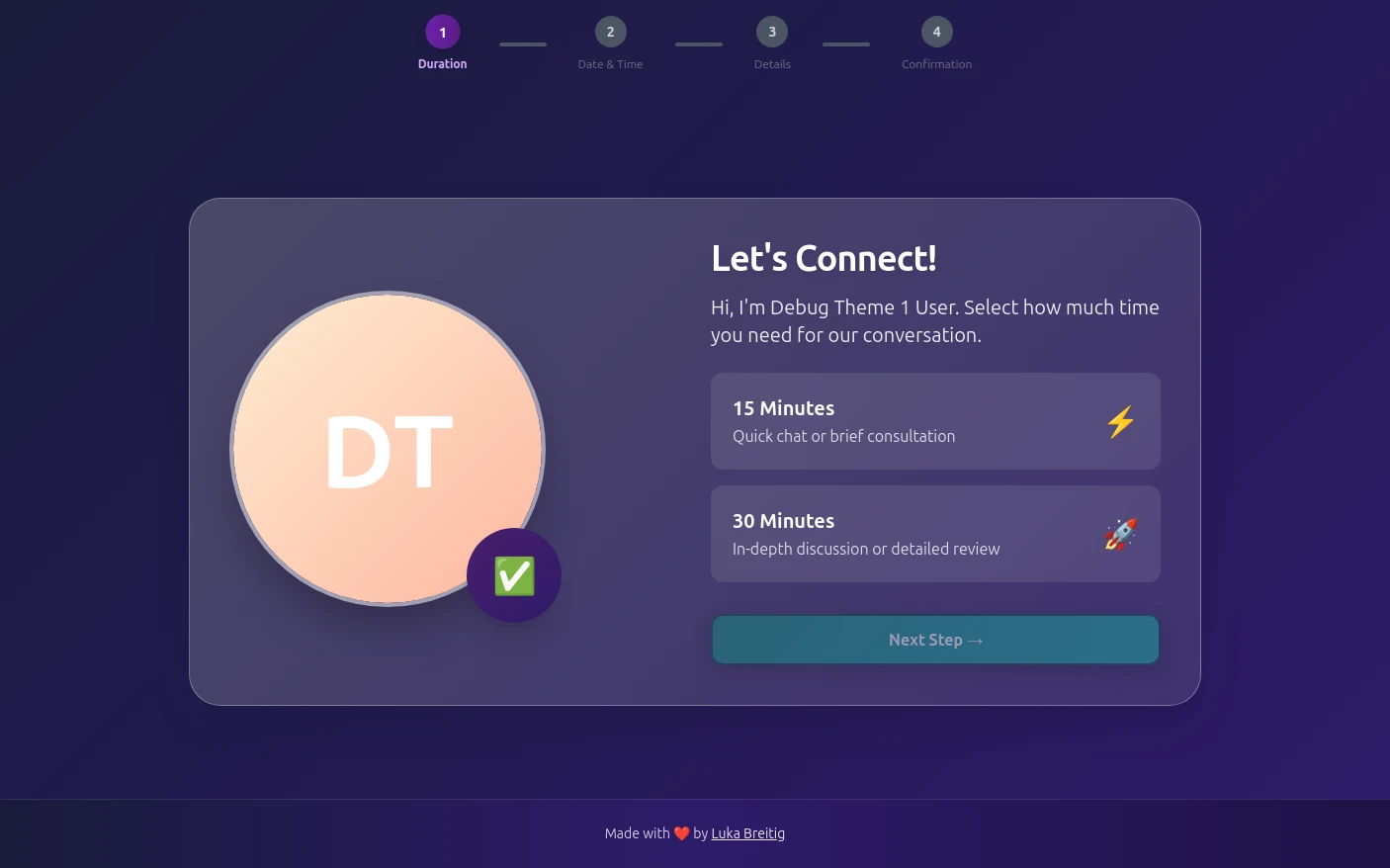
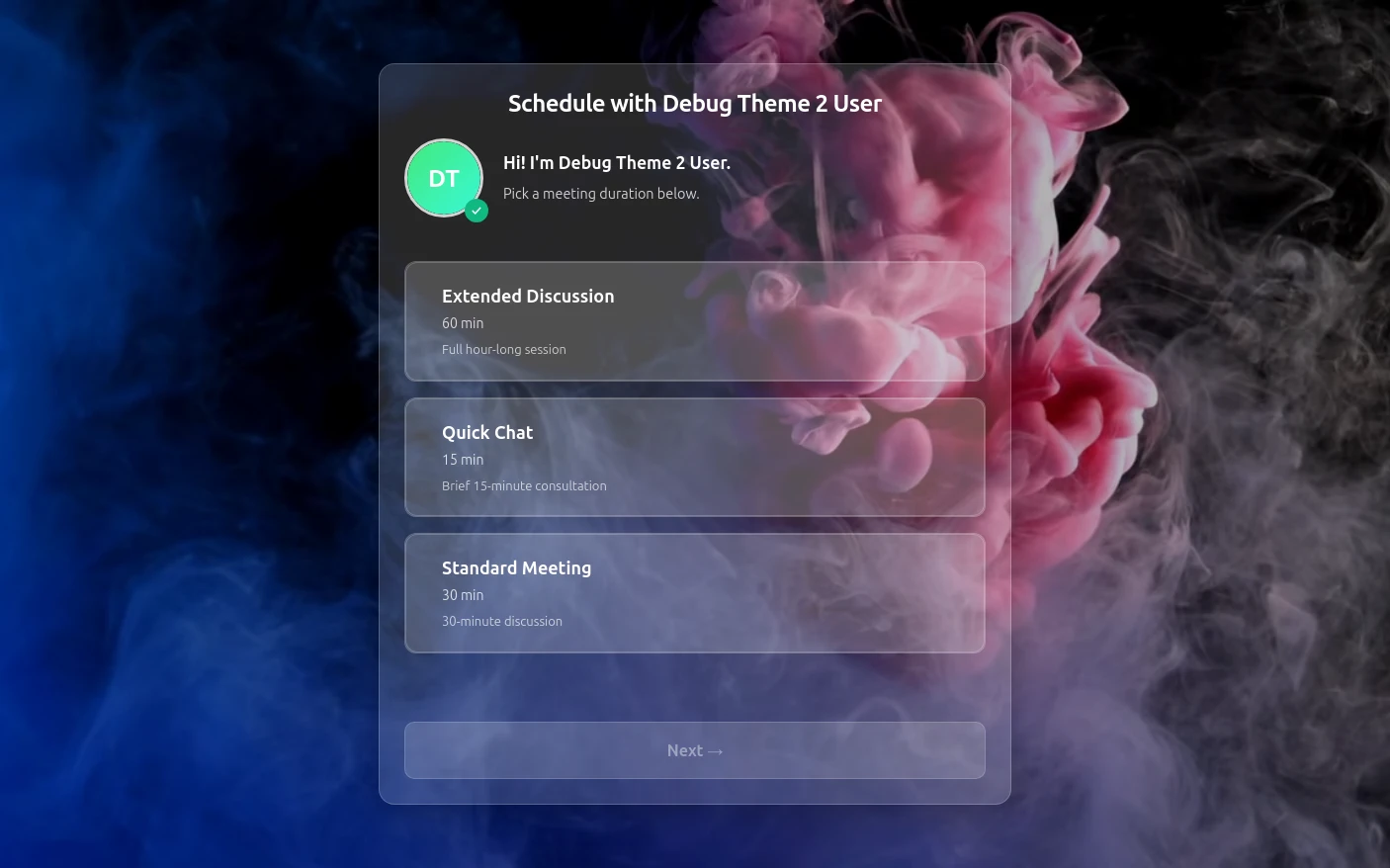
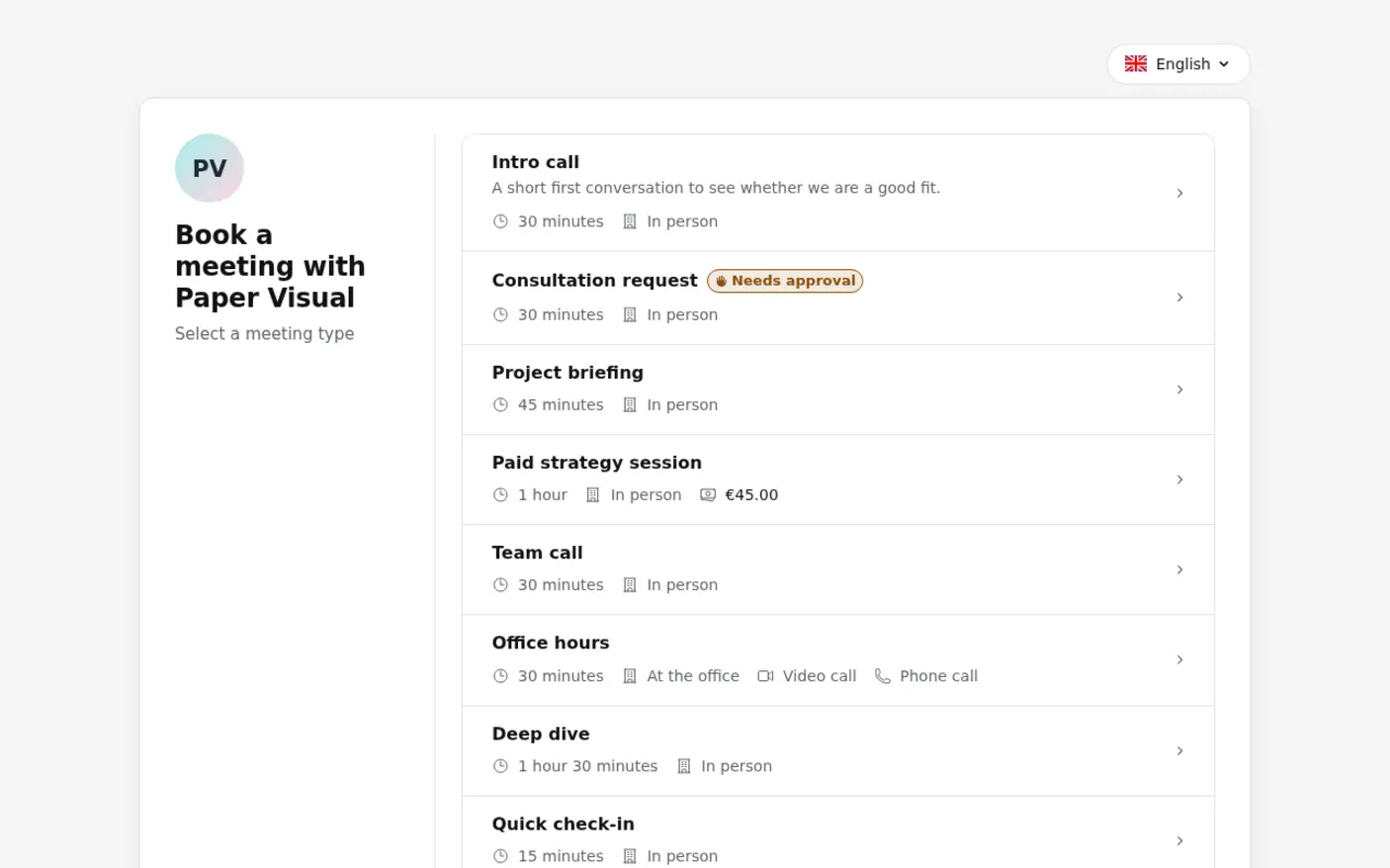
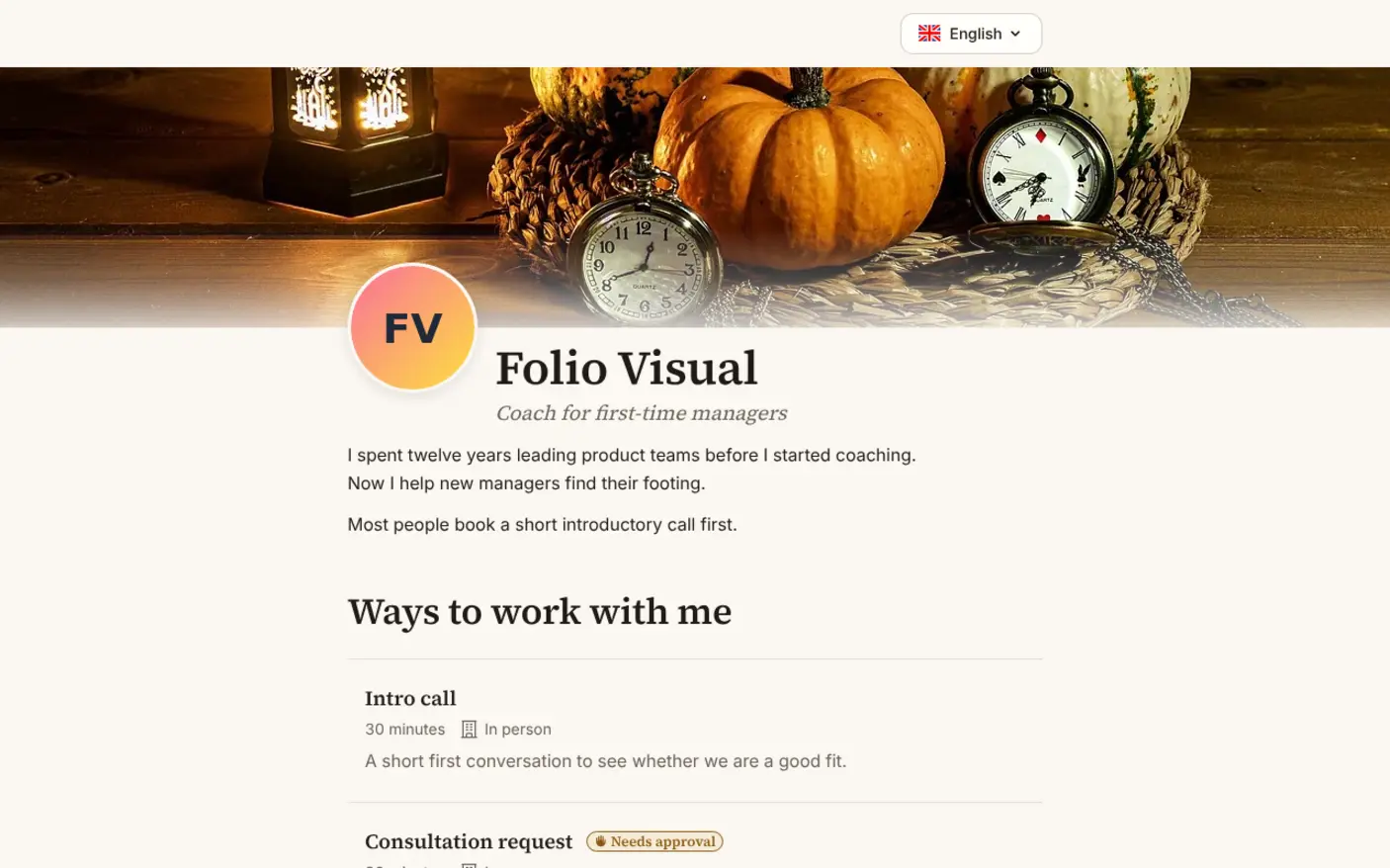
A starter setup for physiotherapists
| Meeting type | Duration | Buffer | Minimum notice | Bookable ahead | Payment at booking |
|---|---|---|---|---|---|
| Initial assessment | 45 min | 15 min | 12 hours | 3 weeks | €30 deposit at booking |
| Follow-up treatment | 30 min | 10 min | 4 hours | 6 weeks | None |
| Video exercise review | 20 min | 10 min | 12 hours | 4 weeks | None |
Intake questions
- Do you have a referral letter, scan report or operation note to bring?
- Are you claiming through private health insurance? If so, which insurer, and what is your authorisation number?
- Will anyone come with you, for example a parent with a patient under 16?
- Is there anything we should know about getting into the building, such as needing step-free access?
The deposit sits on the assessment only, the one slot booked by a stranger. Follow-ups take 4 hours' notice and a 42-day horizon to cover a six-week plan, and the video review sits between them at 12 hours. Three notice windows mean three availability schedules, one per meeting type.
Tymeslot compared with Cliniko, Jane and Acuity
Tymeslot is the narrower, cheaper choice next to Cliniko, Jane and Acuity: it books physiotherapy appointments and nothing else. Payments, price and hosting are the rows a clinic weighs, because a deposit on the first assessment sits against a monthly fee per practitioner, and patient health data against where it is stored. Cliniko and Jane are the better pick if you want treatment notes and invoicing in the same system as the diary, and Cliniko keeps European accounts in Ireland. Acuity takes Square and PayPal as well as Stripe.
| Feature | Tymeslot | Cliniko | Jane | Acuity |
|---|---|---|---|---|
| Deposit or payment at booking | Pro: €30 deposit on initial assessments | Yes: deposit or full payment via Stripe | Yes: card on file, deposit or full payment | Yes, on all plans: Stripe, Square, PayPal, Venmo |
| Entry price | Free; Pro €9/month for deposits and questions | US$45/month for 1 practitioner | CAD $59/month (1 practitioner, 20 bookings) | $16/month paid annually ($20 paid monthly) |
| Hosting in the EU | Yes: patient bookings stored in the EU | Yes: Ireland for accounts created in Europe | No: UK and Europe clinics are stored in the UK | No: data is stored in US data centres |
Sources checked 5 October 2026.
How much time could you save?
A rough estimate, not a promise.
200
minutes saved per week
173.3
hours saved per year
€12,131
annual value of saved time
Which calendars and tools do physiotherapists use with Tymeslot?




Start free, upgrade when you're ready
A physiotherapist who needs assessments, private follow-up links and reminders can stay on Free. The €30 assessment deposit and the referral and insurer questions in the setup below need Pro at €9/month. If your records policy says patient bookings stay on clinic hardware, self-hosting gives you both, with no platform fee.
Free
€0 / month
Pro
€9 / month